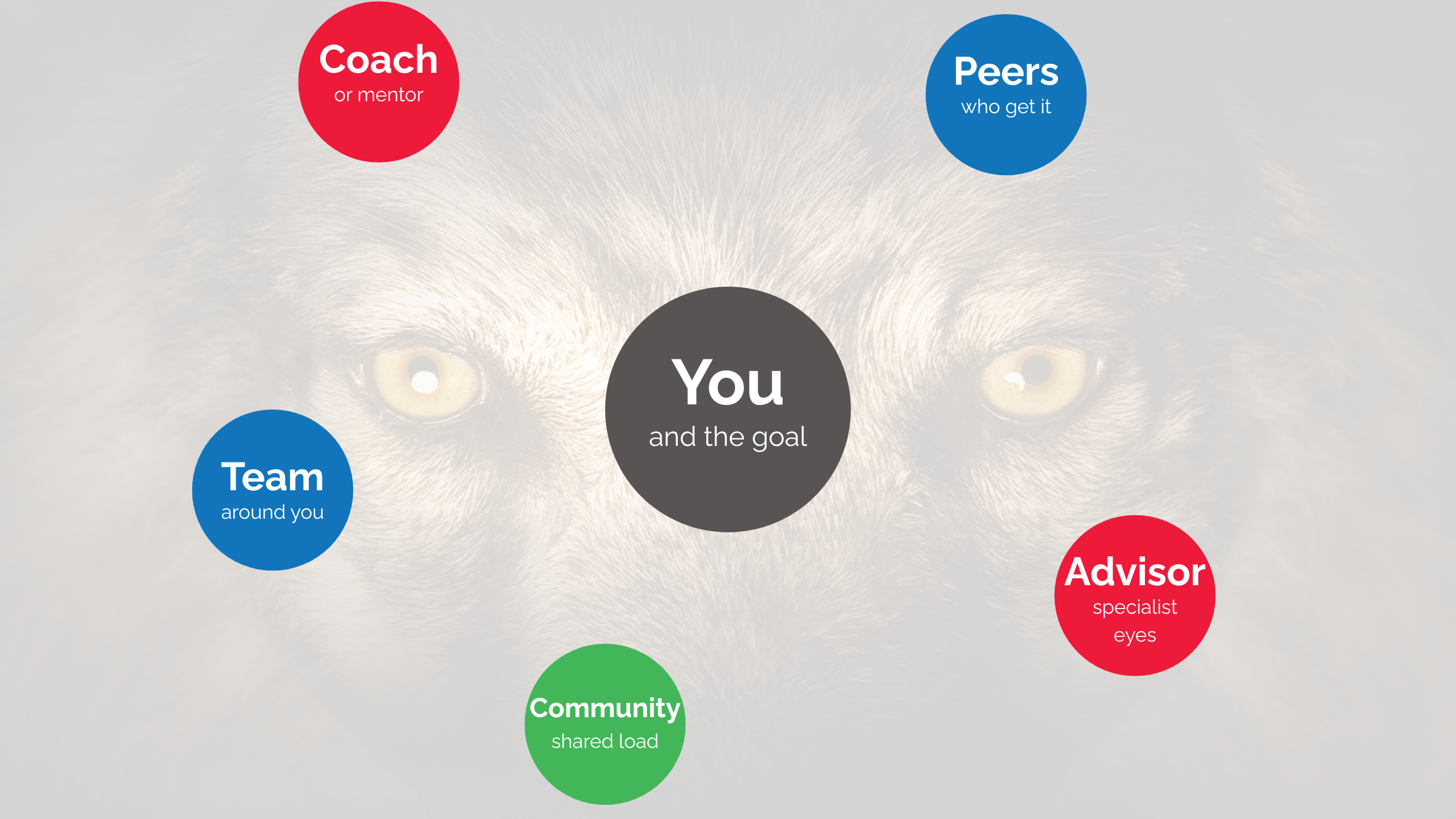
The Lone Wolf Attitude is costing you more than you think
There’s a particular kind of pride that shows up in business owners more than almost anyone else.
It sounds like “I’ve got this.” It sounds like “I don’t want to bother anyone.” It sounds like “I’ll figure it out myself.”
On the surface, it looks like strength. Independence. Grit. The stuff we’re taught to admire.
Underneath, it’s usually just fear dressed up as toughness.
Where the Lone Wolf Attitude comes from
Nobody starts a business planning to do everything alone forever. It creeps in.
In the early days, doing it all yourself is a necessity: there’s no budget, no team, no other option. So you learn to solve every problem yourself, out of survival.
But somewhere along the way, necessity turns into identity. “I have to do this alone” quietly becomes “I should do this alone.” And now asking for help feels like admitting the identity was never true, that you weren’t as self-sufficient as you told yourself you were.
That’s the trap. The lone wolf attitude isn’t really about capability. It’s about protecting an image.
What it actually costs
The cost isn’t always obvious, because it doesn’t show up as a single bad decision. It shows up as slow decisions. Repeated mistakes that a second opinion would have caught early. Burnout that builds quietly because there’s no one to share the load. Blind spots that stay blind, because the whole point of a blind spot is that you can’t see it, someone else has to.
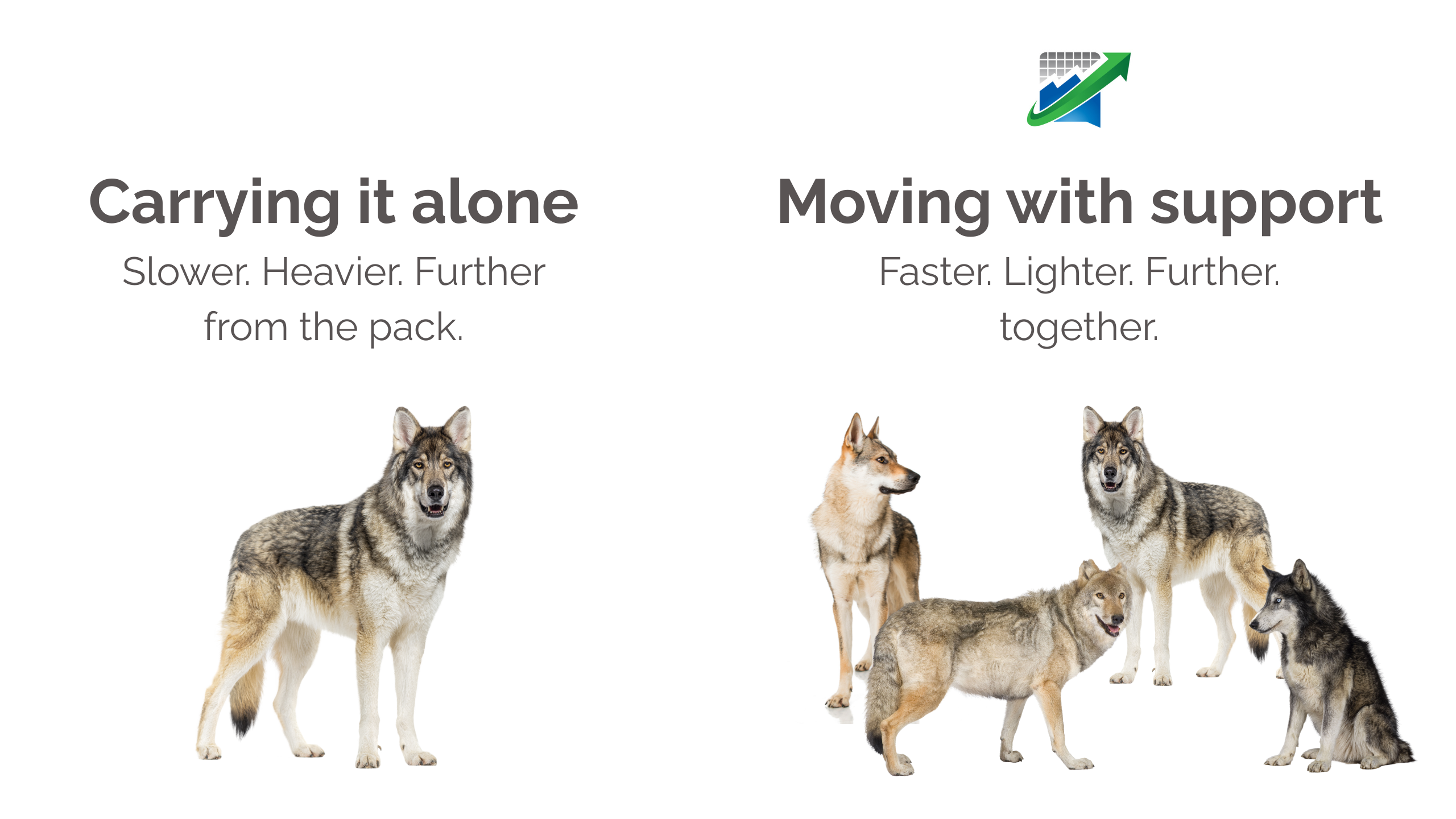
Every wolf that hunts alone still eats less than the pack that hunts together. That’s not poetic license. It’s just true. Coordinated effort outperforms isolated effort almost every time, in nature and in business.
The irony is that the business owners most likely to carry everything alone are usually the ones with the most to lose by doing so. They’ve got the most at stake, the least time to waste on avoidable mistakes, and the least room for burnout to take them out of the game entirely.
Strength isn’t the same as Self-Sufficiency
Somewhere along the way we confused the two.
Real strength isn’t refusing help. It’s knowing exactly where your gaps are and being secure enough to fill them without it meaning anything about your worth.
The strongest leaders I know aren’t the ones who never ask questions. They’re the ones who ask the most, because they’ve stopped treating a question as a confession of weakness and started treating it as a shortcut to a better answer.
They don’t see a coach, a mentor, or a second opinion as a crutch. They see it as leverage, the same leverage a smart investor uses on capital, just applied to time and decision-making instead.
Letting go of the Lone Wolf
You don’t have to abandon independence to let go of the lone wolf attitude. You just have to stop treating “alone” and “capable” as the same thing.
The most capable people in any field are almost never doing it solo. They’re doing it well-supported, which is a very different thing from doing it easy.
If you’ve been carrying your business alone, it’s worth asking honestly: is that because there’s genuinely no one who could help? Or is it because some part of you has decided that asking would mean something about who you are?
Because the business, in the end, will only ever grow as far as you’re willing to let it be helped.
Ready to stop carrying it alone?
If you’ve read this far, some part of you already knows the answer.
Let’s talk about what’s on your plate right now, and where a second set of eyes could shortcut the process for you.