Protect Your Legacy: Business Succession Planning
Every business reaches a point where its next chapter needs to be planned. A family member may be ready to lead. A capable manager may be ready for more. The owners may want to sell, share ownership or reduce their role. Whatever the path, a smooth transition is easier when the business can function beyond one person.
At Business By Design, we often see owners postpone succession planning because daily decisions take priority. Yet those decisions can reveal where the business depends most on them. If you were away for a month, what would keep moving, and what would wait for your return?
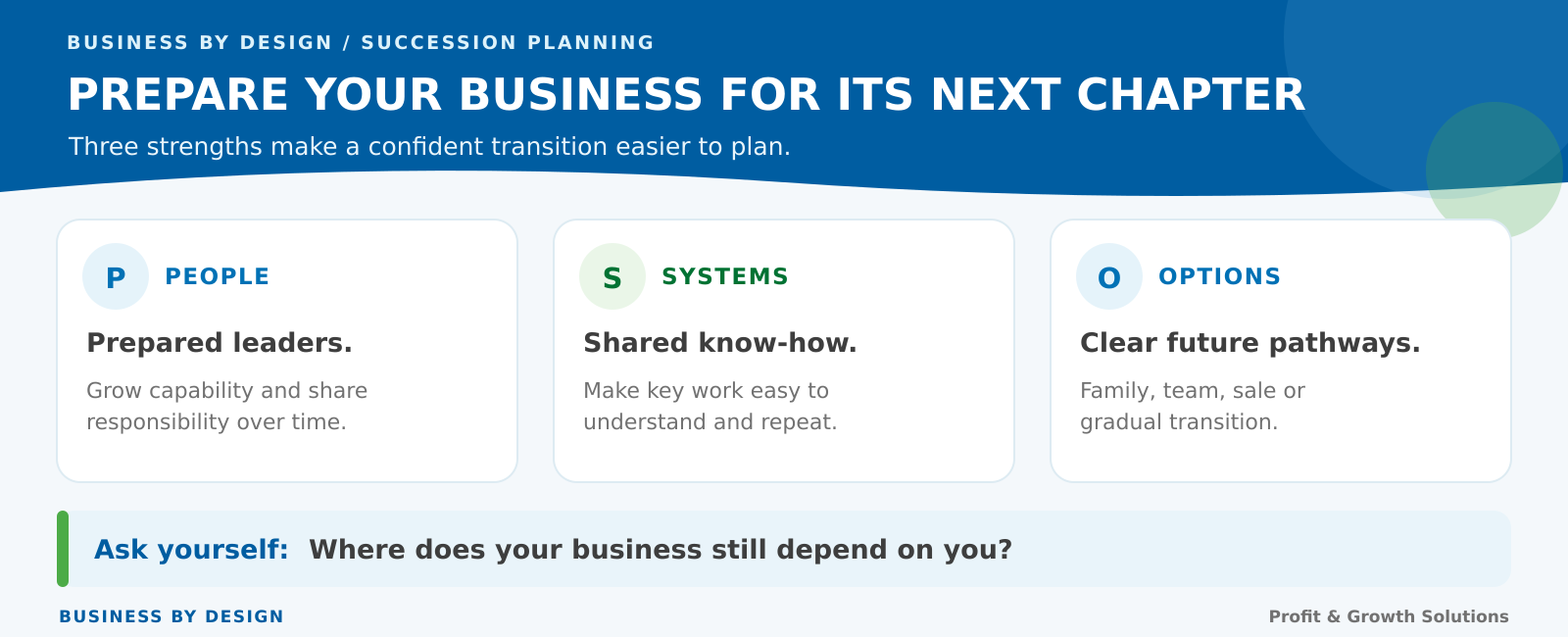
Succession is a business design decision
A succession plan is more than naming who takes over. It connects the owner’s goals with the future leader’s readiness, the team’s responsibilities and the business’s ability to keep performing.
Sean Martyn has more than 30 years of business coaching experience, including work with multi-generational family businesses. He helps owners explore practical options, clarify roles and prepare people for change. And because family and business decisions can overlap, it helps to make room for direct, respectful conversations.
Business By Design’s work with Kelly Grains shows what a planned transition can involve. The family chose to keep the business in the family and identified a future CEO. With Sean’s support, they clarified roles, prepared the incoming leader and strengthened reporting and management routines. The transition took 22 months. The P&L remained positive, and customers and suppliers experienced no significant operational change. Read the Kelly Grains case study.
Likewise, a family farming business connected its succession plan with stronger financial and KPI reporting and new sources of income. Those changes helped support the future of the younger generation and the financial freedom of the older generation. The right approach will differ for every business, so the plan needs to reflect what its owners and people want. Read the family farming case study.
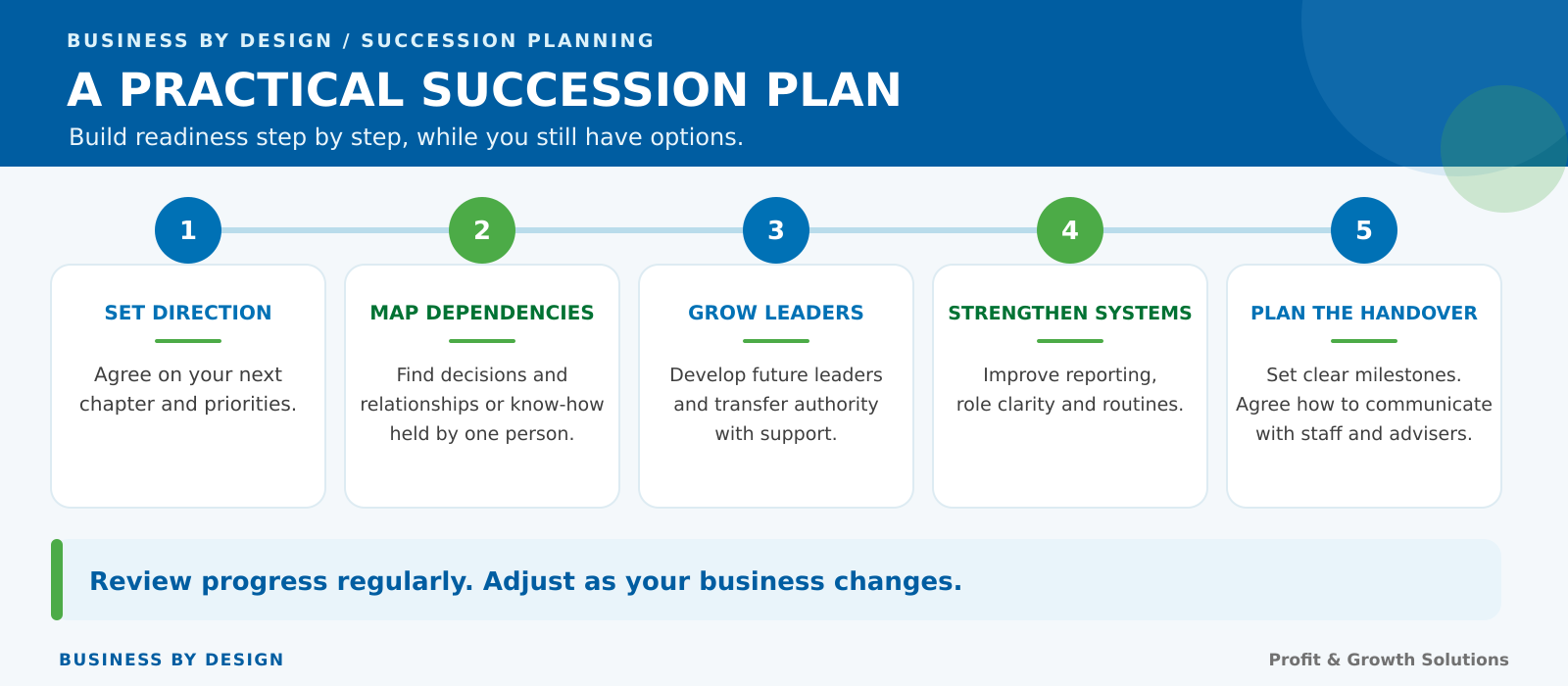
Five steps to build succession readiness
- Define the future. What do you want for yourself, your people and the business? Consider family succession, internal leadership, a sale or a gradual step back.
- Map key dependencies. Which decisions, customer relationships and specialist knowledge sit with one person? Where does the business need a capable back-up?
- Prepare future leaders. Clarify responsibilities, provide support and transfer authority gradually. Are people getting the chance to make real decisions?
- Strengthen operations. Improve reporting, role clarity, leadership routines and repeatable processes. This makes performance easier to understand and maintain.
- Plan and review the handover. Agree on milestones, communication and who owns each action. Involve your legal, accounting and financial advisers where appropriate.
You can start with one dependency. Share a key decision, document a process or give a future leader responsibility for an upcoming project. Then agree how you’ll review progress.
Business By Design works with owners, families and key staff to explore succession options, strengthen management and build a plan around the business. Talk with Sean about succession planning. You don’t need every answer before you begin. Start with a conversation about the future you want, and what needs to change to make it possible.
 Not sure what your business needs to strengthen before a handover? Take our free five-minute Business Benchmarker Quiz to identify what’s working well and where to focus next.